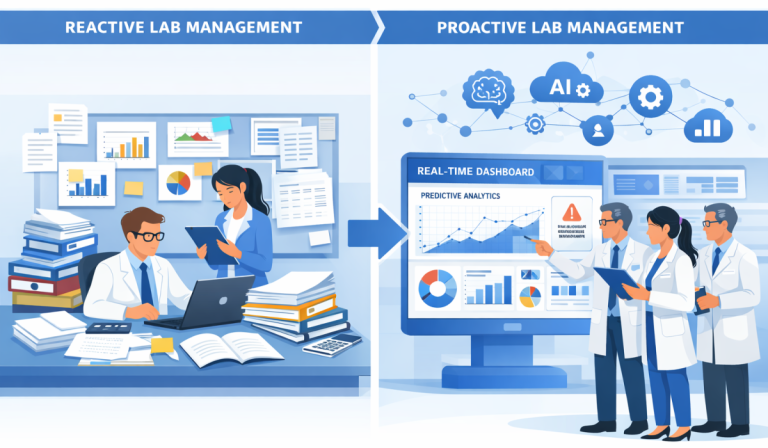
Digitizing a laboratory is no longer optional; it’s a survival. However, many labs rush the process and end up with expensive software that gathers digital dust. Are you guilty of these common pitfalls?
- Replicating Paper-Based Processes
Stop trying to pave the cow path! Digitization isn’t just about making your paper forms digital. Copying manual, inefficient processes directly into software means you’ll just have digital inefficiencies. True digital transformation means rethinking and redesigning workflows to slash manual steps, automate approvals, and banish duplicate data entry forever.
- Ignoring User Experience
If your lab team finds the new system frustrating, slow, or difficult to use, they will absolutely find a way around it. That’s how unofficial workarounds—like hidden spreadsheets and personal notebooks—start. The result? Compromised data integrity, zero traceability, and a compliance nightmare. Make the system intuitive, or watch it fail.
- Over-Customization
Tempted to build a completely unique system? Be warned. Excessive customization is a ticking time bomb. It ramps up complexity, introduces relentless bugs, and makes future upgrades prohibitively expensive—or simply impossible. The smarter, more sustainable choice is a configurable system built on proven industry best practices.
- Neglecting Data Migration
Garbage in, garbage out! Shifting poor-quality, messy data into your new system doesn’t fix problems—it amplifies them. Before you flip the switch, you must clean, standardize, and validate your historical data. Reliable reporting, stress-free audits, and smart decision-making all stand on the foundation of accurate data.
- Underestimating Training Needs
A single training seminar isn’t enough for successful adoption. Laboratories need an ongoing, tailored approach. This means continuous, role-based training and instantly accessible support. Equip your users to correctly leverage the system as your workflows naturally evolve.
- Forgetting System Integration
A LIMS that operates as a silo is a bottleneck in disguise. Your LIMS must be connected. Essential integrations with lab instruments, ERP systems, billing platforms, and reporting tools are non-negotiable. Disconnected systems create operational friction and skyrocket your risk of costly errors.
- Ignoring Compliance from the Start
Compliance isn’t an afterthought; it’s a foundational requirement. Mandates like ISO/IEC 17025 must be woven into the very structure of your system from day one. Trying to retrofit compliance features after implementation? That doubles the work and dramatically increases your operational risk.
- Failing to Plan for Scalability
What works for your lab today won’t necessarily work tomorrow. Don’t limit your future! Your LIMS selection must account for inevitable growth: a surge in sample volume, new test methods, expansion to multiple locations, and constantly shifting regulatory demands.
- Lacking Clearly Defined KPIs
Digitization without a measurement plan is a process with limited value. You can’t manage what you don’t measure. You must clearly define and rigorously track Key Performance Indicators (KPIs) like turnaround time, error rates, instrument utilization, and workload distribution to prove your investment is paying off.
- Choosing the Wrong Implementation Partner
Software is only half the battle. Technology won’t guarantee your success—but the right partner will. Look beyond pure software vendors for partners who deeply understand laboratory operations, the regulatory maze you navigate, and a commitment to long-term support.
Digitization is a journey, not a switch. IMARA LIMS is designed to guide you past these pitfalls with intuitive workflows and scalable architecture.