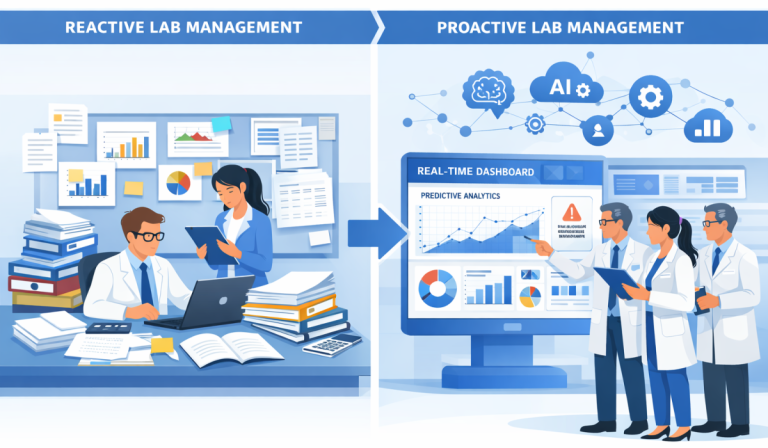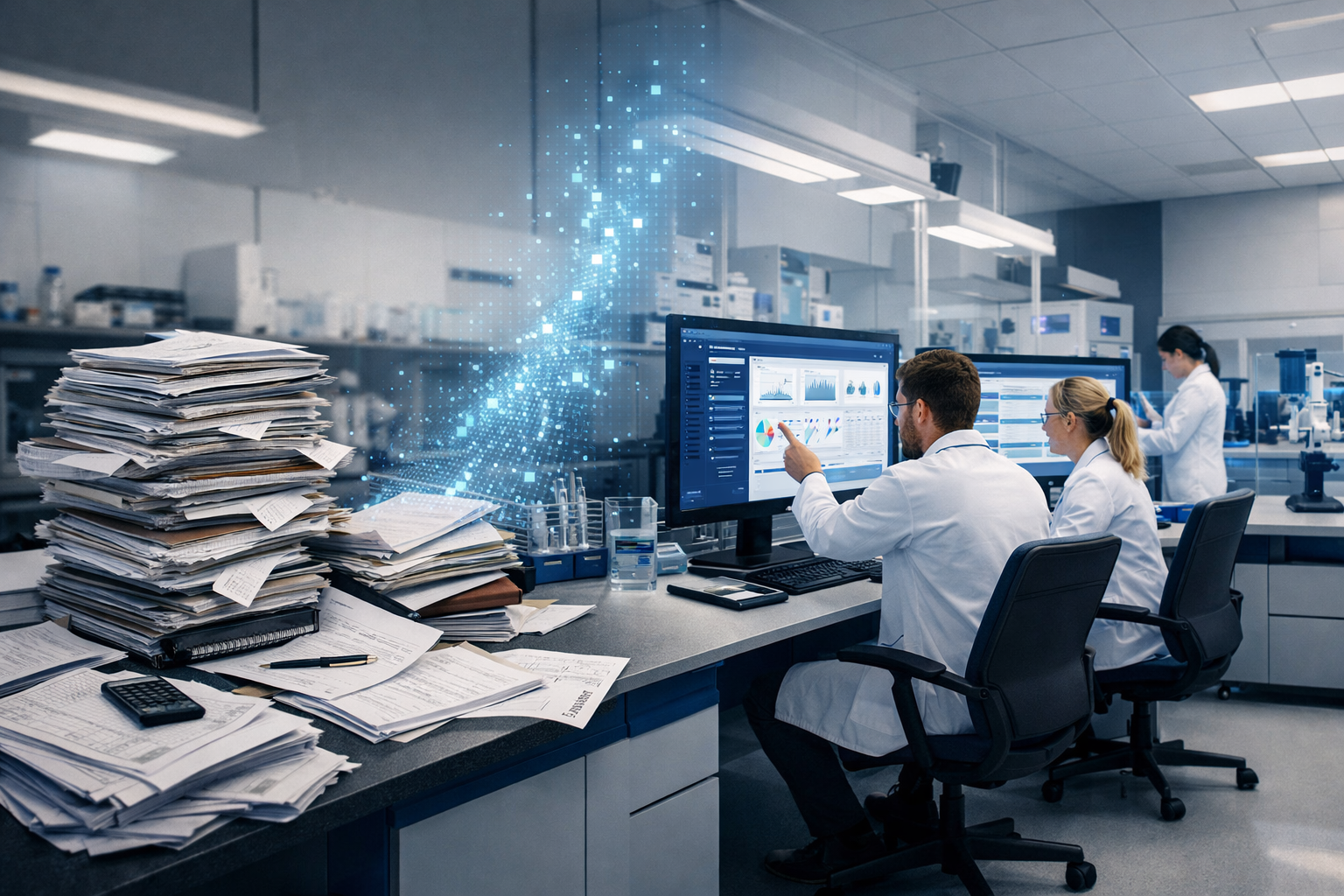
If your laboratory still depends on logbooks, registers, and handwritten records, you’re not alone. Many labs began this way—and stayed there far longer than they planned. But as sample volumes increase and compliance expectations rise, manual record keeping becomes more of a burden than a solution.
Paper once supported laboratory work. Today, it slows it down.
The Reality of Manual Record Keeping in Labs
Manual record keeping sounds simple, but in practice it creates daily friction.
Laboratories using paper-based systems often struggle with:
-
Rewriting the same information across multiple logs
-
Illegible handwriting and incomplete entries
-
Lost or damaged records
-
Time-consuming data searches
-
Delays in approvals and reporting
These issues don’t just waste time—they introduce risk.
Why Paper-Based Records Increase Compliance Risk
In regulated environments, records must be accurate, traceable, and secure. Manual systems make this difficult.
With paper records:
-
Changes are hard to track
-
Version control is nearly impossible
-
Audit trails are incomplete
-
Data integrity is questioned
During inspections, even well-run labs can appear disorganized simply because records are scattered across books and folders.
Audit Stress: The Breaking Point for Many Labs
Audits expose the limitations of manual record keeping more than any other activity.
Instead of quick access to information, teams often:
-
Search through cabinets and archives
-
Cross-check multiple logbooks
-
Recreate missing data
-
Spend days preparing what should take minutes
The stress isn’t caused by lack of effort—it’s caused by outdated processes.
Why Laboratories Are Moving Beyond Paper
Modern laboratories are rethinking how records should work.
They want systems that:
-
Capture data once, accurately
-
Store records securely in one place
-
Make information easy to retrieve
-
Provide clear traceability
-
Support inspections with confidence
Paper simply can’t deliver these benefits anymore.
The Shift from Manual Logs to Digital Workflows
Digital laboratory systems replace books with structured, controlled workflows.
Instead of handwriting entries:
-
Data is entered consistently
-
Time and user stamps are automatic
-
Records are protected from loss or damage
-
Historical data is searchable in seconds
This shift transforms record keeping from a chore into a strength.
Better Records Mean Better Lab Performance
When manual record keeping disappears:
-
Analysts spend more time on testing, less on paperwork
-
Supervisors review and approve faster
-
Quality teams gain confidence in data
-
Managers see real-time progress
Efficiency improves naturally—without pushing people harder.
Preparing Your Laboratory for What’s Next
Paper-based systems make growth difficult. As labs expand, they need:
-
Faster turnaround times
-
Multi-user collaboration
-
Remote access to records
-
Strong data integrity
Digital systems provide the foundation for automation, analytics, and smarter decision-making.
A Quiet Change Is Already Underway
Across food & beverage, environmental testing, pharma, and research labs, teams are quietly moving away from books—not to follow trends, but to remove friction from daily work.
Once the switch is made, few labs ever want to return to paper.
Final Thoughts
Manual record keeping has done its job—but it has reached its limit.
If your lab feels overwhelmed by books, registers, and paperwork, it’s not a failure. It’s a signal that your operations have outgrown manual systems.
The future of laboratory record keeping is clearer, safer, and digital.
Soft Call to Action
Curious how laboratories are simplifying record keeping and reducing audit stress without disrupting daily work?
Explore modern laboratory workflows with Imara LIMS:
https://imaralims.com/contact